Why Wicking Technology Still Struggles to Gain Traction in Commercial Agriculture
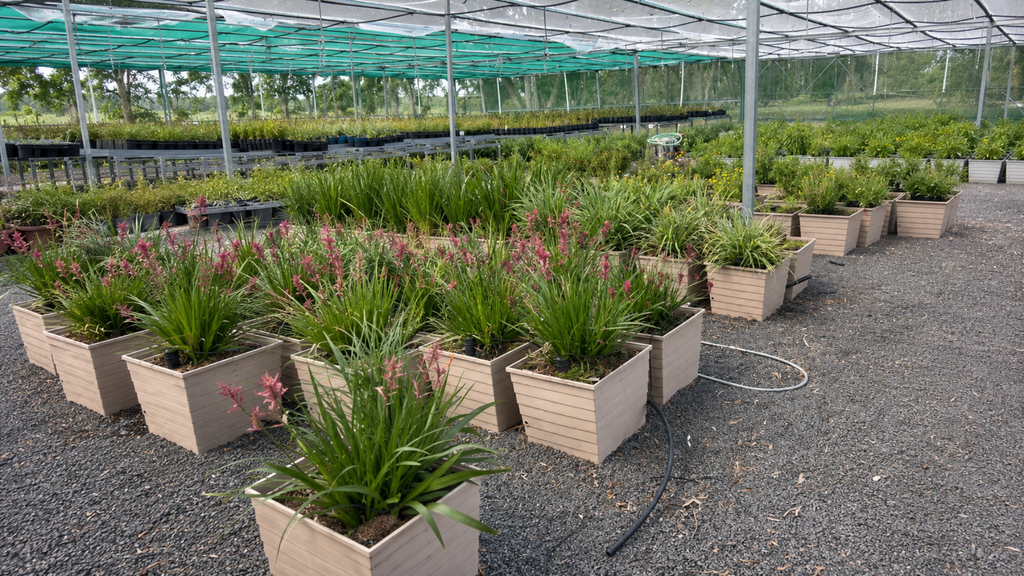
Commercial growers are under pressure from every direction. Water costs are rising. Climate variability is making irrigation planning harder. Labour shortages continue to squeeze margins. Yet despite all this, adoption of wicking systems for commercial growers remains relatively slow.
Why?
It’s not because growers don’t care about water efficiency. And it’s not because sub-irrigation agriculture lacks potential. The hesitation comes down to something more practical: risk.
For most growers, changing irrigation infrastructure is never a small decision. Even promising sustainable irrigation technology has to prove it can survive the realities of commercial production before it earns trust.
The Real Barrier Isn’t Performance - It’s Perceived Risk
Wicking systems already demonstrate strong advantages in water-efficient farming. Stable moisture levels, reduced evaporation, lower watering frequency, and improved resilience in hot conditions all make sense on paper.
But commercial agriculture doesn’t run on theory alone.
Growers ask questions like:
- Will this integrate with existing infrastructure?
- What happens if the system fails during peak production?
- How difficult is maintenance at scale?
- Can this work across different crops and soil profiles?
- Is the return worth the disruption?
Those questions are reasonable. In fact, they’re exactly why wicking bed adoption moves slower in commercial settings than in backyard or urban gardening markets.
Complexity Is the First Psychological Barrier
The moment a technology affects irrigation, growers assume complexity follows.
That perception matters more than many ag-tech companies realise. If a system looks difficult to install, difficult to maintain, or difficult to troubleshoot, adoption drops immediately.
This is especially true with wicking systems for commercial growers because the technology challenges conventional irrigation thinking. Traditional systems are familiar. Growers know where problems occur, how to repair them, and what performance to expect.
Wicking changes the water delivery model entirely.
Even if the actual operation is straightforward, unfamiliarity creates friction.
Where growers typically hesitate
- Concerns about installation time
- Questions around long-term durability
- Uncertainty around scaling across large production areas
- Lack of familiarity with sub-surface water movement
- Fear of hidden maintenance requirements
Until growers see a comparable operation using the system successfully, many default to proven methods.
That’s not resistance to innovation. That’s operational self-protection.
Upfront Costs Always Feel Bigger Than Long-Term Savings
Every ag-tech provider talks about ROI. Growers care more about cash flow.
That distinction matters.
Even when sustainable irrigation technology reduces long-term water use and labour costs, upfront infrastructure investment can still feel difficult to justify during tight seasons.
Commercial farming operates on thin margins and constant uncertainty. When growers are dealing with fertiliser costs, labour pressure, fuel prices, and unpredictable weather, future savings often lose priority against immediate operational demands.
This creates a familiar adoption pattern:
- Proven technologies get delayed
- Pilot projects get postponed
- Infrastructure upgrades become “next season’s problem”
For some growers, wicking systems also trigger concerns about retrofitting existing layouts or replacing irrigation infrastructure that still technically works.
Even when the economics make sense long term, the transition period can feel financially uncomfortable.
Agriculture Rewards Reliability More Than Experimentation
Every industry talks about innovation. Agriculture rewards consistency.
That cultural reality plays a major role in wicking bed adoption.
Growers already manage enough uncontrollable variables:
- Weather
- Pest pressure
- Input pricing
- Labour availability
- Market volatility
Adding another unknown into the system can feel unnecessary — especially when current irrigation systems are already producing acceptable yields.
There’s also a strong peer influence effect in agriculture.
Growers trust what neighbouring growers are already using successfully. If few commercial operators in a region are using sub-irrigation agriculture systems, widespread adoption slows naturally.
Nobody wants to become the cautionary tale.
Common commercial concerns around wicking systems
- Fear of yield disruption during trial phases
- Questions about crop compatibility
- Uncertainty around seasonal performance
- Concerns about scaling from pilot to production
- Lack of confidence in commercial benchmarking
Without visible commercial examples, hesitation becomes logical.
Most Growers Still Haven’t Seen Wicking at Commercial Scale
Awareness remains a major problem.
Many commercial operators still associate wicking with backyard gardens or small-scale urban farming. That perception limits serious consideration, even when the underlying water management principles are highly relevant to broadacre or intensive production systems.
This is where the industry currently faces a demonstration gap.
Growers don’t just want marketing claims. They want:
- Commercial trial data
- Side-by-side comparisons
- Real operational case studies
- Third-party validation
- Grower-to-grower recommendations
Without those things, sustainable irrigation technology struggles to move beyond curiosity.
Why demonstration matters so much
Agriculture is practical by nature.
A grower seeing another grower reduce water usage while maintaining crop performance carries far more weight than a brochure or product pitch ever will.
Commercial adoption accelerates when growers can physically inspect:
- Installation methods
- Crop performance
- Maintenance routines
- Water savings
- Operational realities
That visibility reduces psychological risk.
Infrastructure and Industry Support Are Still Catching Up
Large-scale agricultural adoption rarely happens through technology alone.
It requires ecosystems.
For wicking systems for commercial growers to become mainstream, support infrastructure needs to mature alongside the technology itself.
Right now, many growers still struggle to access:
- Commercial installers
- Agronomic guidance
- Design standards
- Scalable supply chains
- Independent technical support
That matters because growers don’t just buy irrigation systems. They buy confidence.
If support networks appear fragmented or immature, adoption slows regardless of how strong the technology may be.
So What Actually Moves Adoption Forward?
Commercial growers don’t need more hype around water-efficient farming.
They need reduced risk.
That changes the conversation entirely.
The most effective strategies for accelerating adoption
Demonstration farms and pilot sites
Nothing builds trust faster than visible proof under real commercial conditions.
Growers need access to:
- Commercial-scale trial sites
- Crop-specific case studies
- Multi-season performance data
- Open demonstration events
Risk-sharing models
Pilot subsidies, staged implementation, or co-funded trials reduce financial hesitation significantly.
The easier it is to trial sustainable irrigation technology without major upfront exposure, the faster adoption moves.
Stronger industry partnerships
Adoption accelerates when trusted industry groups get involved.
This includes:
- Agronomists
- Grower networks
- Councils
- Research organisations
- Irrigation consultants
Peer validation matters.
Better technical support systems
Commercial operators need clear pathways for:
- Installation
- Troubleshooting
- Maintenance
- System optimisation
- Expansion planning
Confidence grows when support feels reliable and accessible.
Wicking Technology Is Entering a Different Stage
The conversation around wicking systems is changing.
This is no longer just about urban gardening or niche sustainability projects. As water pressure intensifies and growers search for more resilient production models, sub-irrigation agriculture is becoming harder to ignore.
But adoption won’t happen because the technology is “innovative.”
It will happen when commercial growers see that the operational risk of staying with conventional systems is becoming greater than the risk of trying something new.
-
Posted in
self watering pots